











Planning for Private School Fees While Preparing for Retirement

Introduction
As you approach retirement, your financial priorities shift toward preserving wealth, managing income, and ensuring your assets can support the lifestyle you want in later life. Yet, for many parents in their 50s or early 60s, education costs may still form part of the financial picture.
Whether supporting younger children or helping grandchildren, private education remains an important goal for many families. The Independent Schools Council (ISC) reports that 556,551 pupils now attend 1,411 member schools, the highest number since records began in 1974.¹
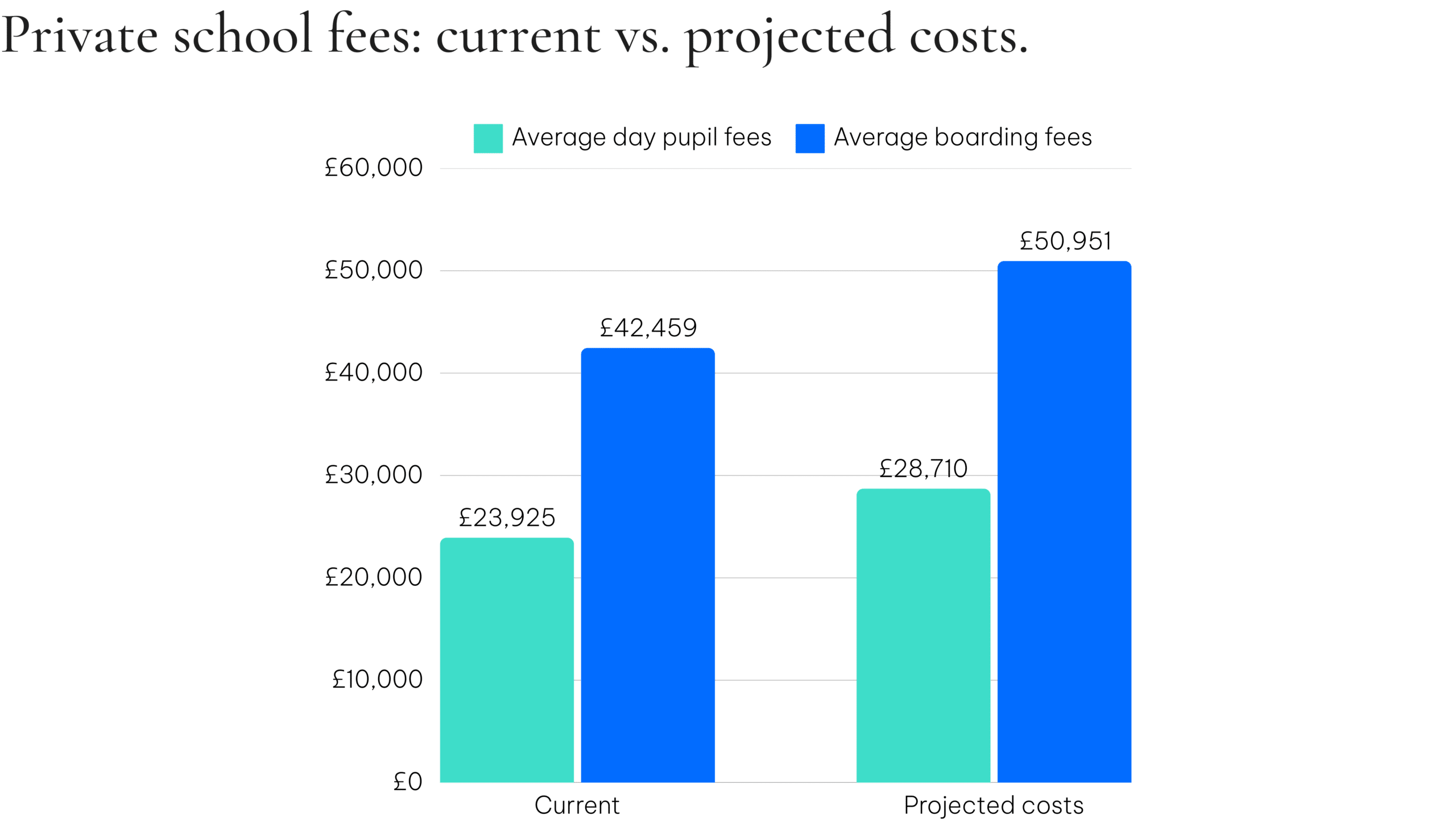
Providing a private education offers a wealth of benefits: smaller class sizes, specialist teaching, and a broader curriculum. However, the costs are significant. The average day fee is now £23,925 per year, and for boarding pupils, it rises to £42,459.² From January 2025, school fees will also be subject to VAT, pushing the average day fee to £28,710 and the average boarding fee to £50,951.
Over the course of a full education, that means families could face around £460,000 in day pupil fees or £815,000 in boarding fees per child. For those nearing retirement, that is a commitment that requires careful planning and tax-efficient structuring.
1, 2 ISC Census and Annual Report, January 2024

At a glance
- School fees could total £460,000–£815,000 per child.
- VAT on school fees from 2025 increases overall costs.
- Aligning education costs with retirement income planning can ease cash flow.
- Tax-efficient investment vehicles can help manage withdrawals.
Take Your Autumn Statement Impact Assessment
Start NowBalancing Education Costs and Retirement Goals
For those nearing retirement, managing large financial commitments alongside preparing for life after work can feel like a juggling act. Some parents are still funding school or university costs while also making final pension contributions or clearing mortgages.
If school fees are part of your financial picture, integrating them into your retirement strategy is essential. The goal is to fund education without disrupting your long-term plans for income security and lifestyle.
Planning Ahead: The Value of Structure
Let’s assume school fees rise by 3.5% per year. Over a 14-year period, this represents a major financial commitment. However, with structured planning, it is possible to meet education costs while staying on track for retirement.
This often means reviewing how investments, pensions, and other assets work together. Planning ahead can allow you to draw from the right sources at the right time, maintaining flexibility and reducing unnecessary tax exposure.
Key tax-efficient solutions
ISAs remain one of the simplest and most tax-efficient ways to save or invest toward school fees. You can invest up to £20,000 per adult (2024/25) each year, and any growth or withdrawals are free from income and capital gains tax.
For pre-retirees, ISAs can be particularly valuable because they allow flexible withdrawals that do not count as taxable income, which can help manage your tax position once you stop working.
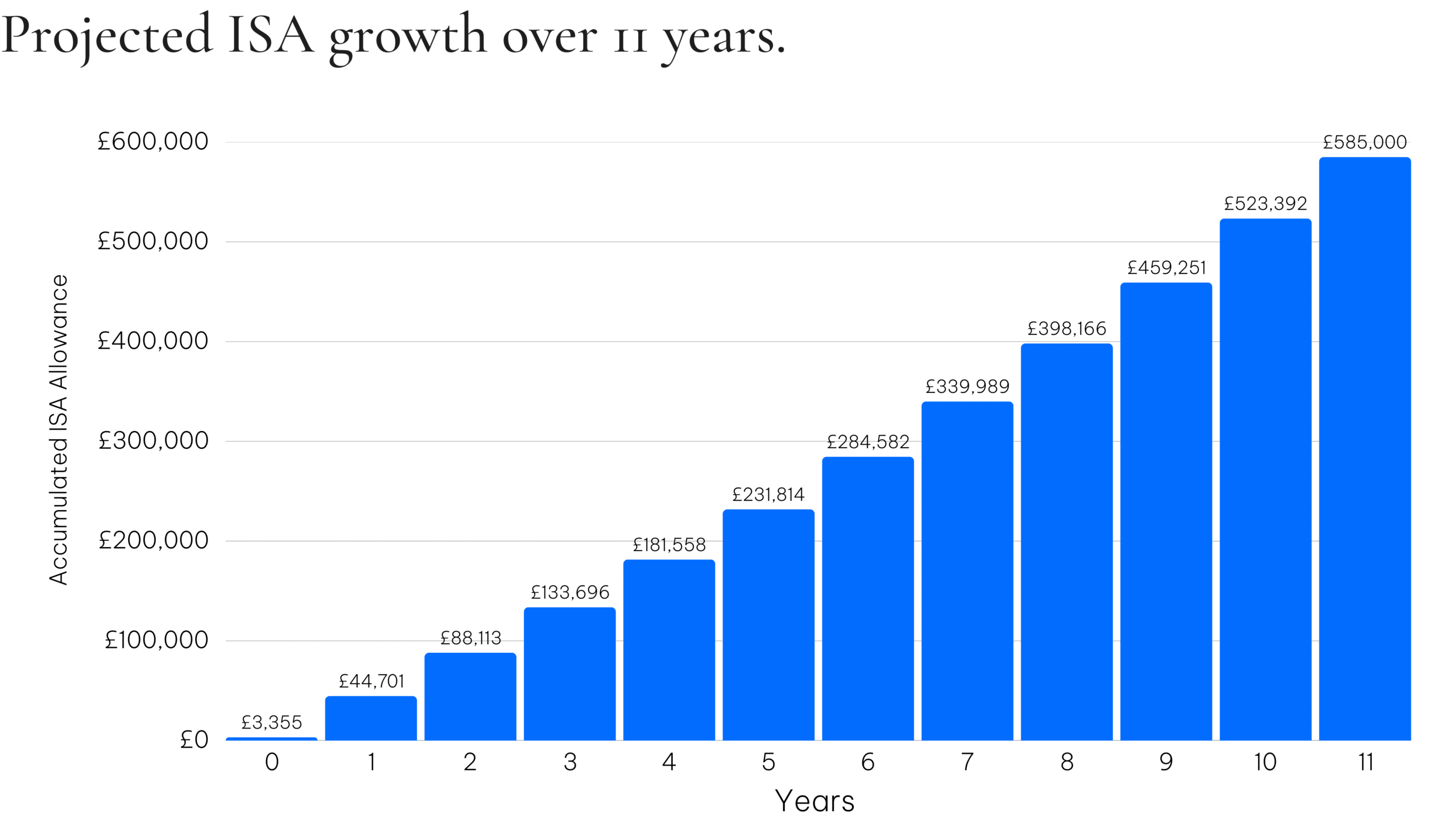
If both parents had maximised ISA contributions from a child’s birth, achieving around 5% net annual growth, that could amount to approximately £585,000 by the time the child is 11 (illustrative only).
ISAs can therefore serve two purposes: funding education in the short term and supplementing income in retirement later on.
*These figures are examples only and they are not guaranteed – they are not minimum or maximum amounts. What you get back depends on how your investment grows and the tax treatment of the investment.
The value of an ISA with St. James’s Place will be directly linked to the performance of the funds selected and may fall as well as rise. You may get back less than you invested.
The favourable tax treatment of ISAs may be subject to changes in legislation in the future.
Investment Bonds allow for tax-deferred growth and flexible withdrawals, which can be useful for pre-retirees managing school fees while controlling taxable income.
You can invest a lump sum and withdraw up to 5% of the original amount each year without triggering an immediate income or capital gains tax charge. This 5% allowance can accumulate for up to 20 years, allowing flexibility in how and when funds are accessed.
For those planning retirement income, Bonds can be structured to align with pension withdrawals or other income sources, helping maintain stability and manage tax exposure.
The value of an investment with St. James’s Place will be directly linked to the performance of the funds you select and the value can therefore go down as well as up. You may get back less than you invested.
The levels and bases of taxation, and reliefs from taxation, can change at any time. The value of any tax relief depends on individual circumstances.
Please note that if the withdrawals taken exceed the growth of the bond, the capital will be eroded.
Unit Trusts and GIAs can be used to invest beyond tax-free wrappers, offering access to a wide range of asset classes such as shares, bonds, and property.
Investors benefit from a £500 dividend allowance and a £3,000 capital gains allowance (2024/25). While returns from these investments may be taxable, they can be managed carefully to limit exposure and maintain tax efficiency.
These accounts can also play a role in balancing liquidity needs. For instance, a GIA might hold funds earmarked for upcoming education costs, while longer-term investments remain untouched for retirement.
The value of an investment with St. James’s Place will be directly linked to the performance of the funds you select and the value can therefore go down as well as up. You may get back less than you invested.
The levels and bases of taxation, and reliefs from taxation, can change at any time. The value of any tax relief depends on individual circumstances.
Some pre-retirees may be helping grandchildren with private education costs. Using the £3,000 annual gifting exemption (£6,000 for couples) provides a tax-efficient way to support family education funding.
Larger gifts can also be exempt from inheritance tax (IHT) if the donor survives seven years, or if the payments are made regularly from surplus income.
Under the “Dispositions for the maintenance of children” rules, parents can pay for school fees directly from income without these being treated as taxable transfers for IHT purposes.
A disposition is exempt if it is:
– made in favour of a child of either party to a marriage or civil partnership, and
– for that child’s maintenance or education before the age of 18, or while in full-time education.
The levels and bases of taxation, and reliefs from taxation, can change at any time. The value of any tax relief depends on individual circumstances.
Further criteria applies within the HMRC IHT Manual IHTM04175 which is subject to change.
Private schools offer a range of scholarships and bursaries to support families. About one-third of pupils in private education receive some form of assistance.³
Bursaries are typically based on financial need and can cover a portion or, in some cases, the full cost of tuition. Scholarships are generally awarded for academic, sporting, or artistic achievement.
Even partial support can make a meaningful difference when education and retirement planning overlap.
3 ISC School Fee Assistance, April 2023
Some families choose to prepay several years of school fees, often receiving a discount in return. This can be attractive if you have cash available from bonuses, business proceeds, or pension withdrawals.
However, before committing to advance payments, consider whether those funds could generate higher returns if invested instead. Retaining liquidity and flexibility is often more important at this stage of life, especially as you approach retirement.
Integrating Education Costs with Retirement Planning
The years leading up to retirement are critical for setting up lasting financial security. Balancing school fees with pension contributions, savings, and investment drawdowns requires a coordinated plan.
You may wish to review your overall asset allocation, consider pension top-ups or consolidation, and ensure you are drawing income in the most tax-efficient way. Education funding can fit within this structure, provided it aligns with your retirement income timeline and withdrawal strategy.
Working with a financial adviser can help you coordinate these moving parts and maintain a clear path toward both your children’s education and your own financial independence.
Securing a Smooth Transition to Retirement
Private education is a significant commitment but one that can be managed effectively with foresight and structure. As you approach retirement, it is about balancing generosity with prudence, ensuring your loved ones benefit from quality education while your long-term goals remain on track.
Planning early, diversifying investments, and using tax-efficient solutions can help you preserve capital and maintain flexibility as your circumstances evolve.
The value of an investment with St. James’s Place will be directly linked to the performance of the funds selected and may fall as well as rise. You may get back less than you invested.
The levels and bases of taxation, and reliefs from taxation, can change at any time and depend on individual circumstances.

Should you require more information or have particular questions, we invite you to contact us at your convenience.
Contact Us
Nauman Gondal
Chief Executive Officer