











Planning for Your Children’s Future: How to Prepare for Private School Fees the Smart Way

Introduction
Raising a young family brings enormous joy and plenty of financial responsibility. Between childcare, mortgages, and everyday living costs, planning for future expenses such as private education can feel like a challenge. Starting early can make all the difference.
Private education is increasingly popular among parents who want smaller class sizes, specialist teaching, and a wide range of opportunities. The Independent Schools Council (ISC) reports that 556,551 pupils now attend 1,411 member schools, the highest number since records began in 1974.¹
However, quality education comes at a cost. The average day fee is now £23,925 per year, rising to £42,459 for boarding pupils.² With VAT on school fees due from January 2025, these figures could increase to £28,710 and £50,951 respectively. Over a full education, that means parents could pay around £460,000 in day fees or £815,000 in boarding fees.
For families managing multiple priorities, a clear and flexible plan can make private education achievable without compromising other goals.
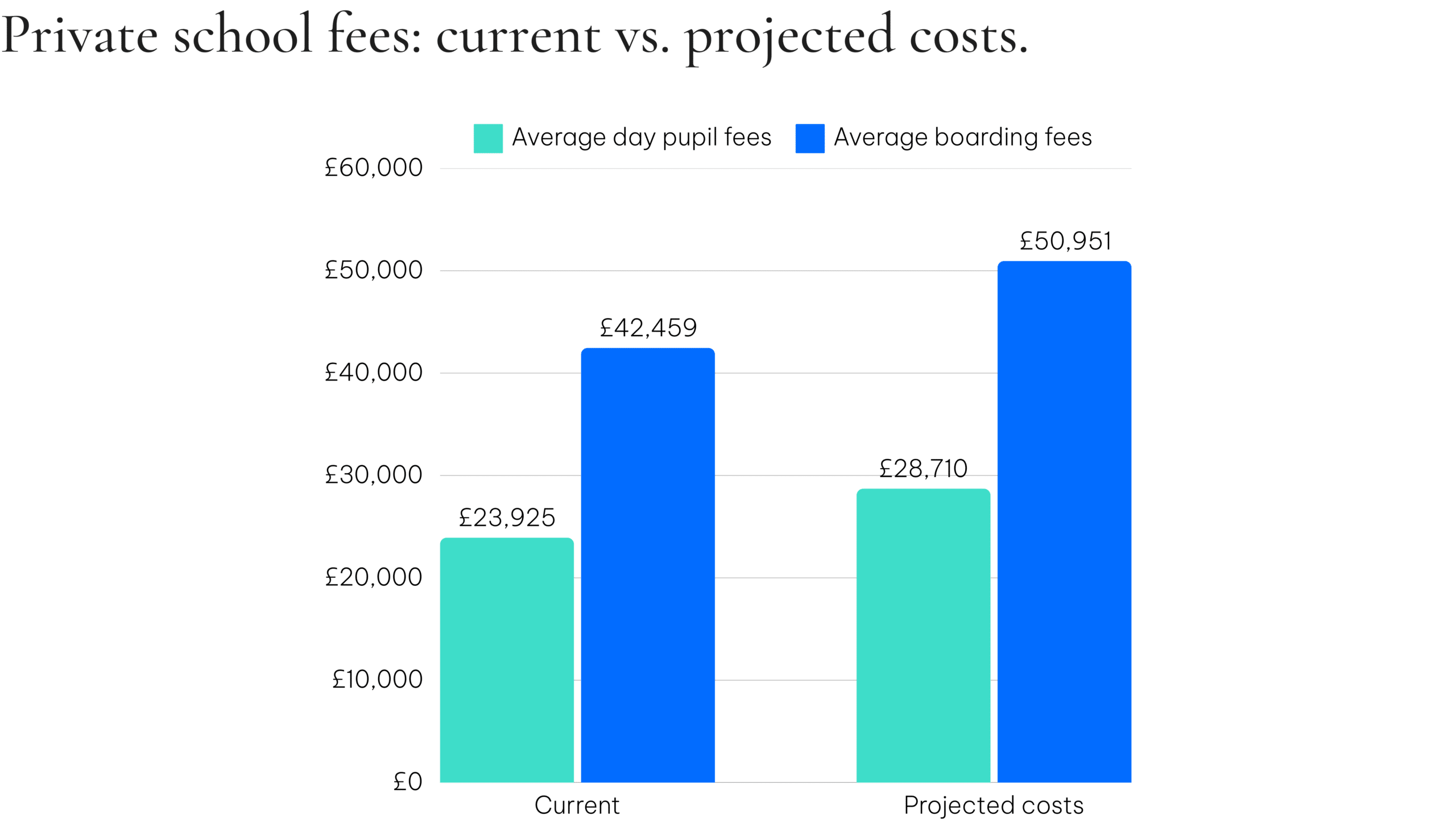
1, 2 ISC Census and Annual Report, January 2024

At a glance
- School fees could total £460,000–£815,000 per child.
- Early planning helps spread the cost and reduce financial strain.
- ISAs, Bonds, and GIAs can help build savings tax-efficiently.
- Combining protection, budgeting, and investing supports family stability.
Take Your Autumn Statement Impact Assessment
Start NowStart Early and Build a Family Plan
If school fees increase by 3.5% a year, one of the lowest rates in recent years, the cost of private education can add up quickly.
The earlier you begin saving and investing, the easier it becomes to manage these payments in the future. Setting aside regular monthly amounts allows you to benefit from compound growth, helping your money grow steadily over time.
By including school fee planning within your household budget, you can balance today’s costs with your long-term goals more effectively.
Balancing Everyday Costs and Future Goals
Many young families are juggling mortgages, childcare, and career growth while trying to save for the future. Finding room in your budget for school fees can feel daunting, but a structured approach makes it easier.
Even if school is several years away, the earlier you start, the more options you have later. Early investing means smaller contributions can have a bigger impact.
Combining regular saving, family protection, and tax-efficient investing helps you create stability and confidence in your financial future.
Key tax-efficient solutions
An ISA is one of the simplest and most flexible ways to save for future education costs. Each parent can invest up to £20,000 per tax year (2024/25), with all interest and growth free from income and capital gains tax.
If both parents contribute the maximum allowance each year from a child’s birth and achieve 5% net annual growth, this could build to around £585,000 by age 11 (illustrative only). Regular saving, even with modest amounts, can grow substantially over time.
Withdrawals are tax-free and flexible, so you can access funds when needed for fees or other family priorities.
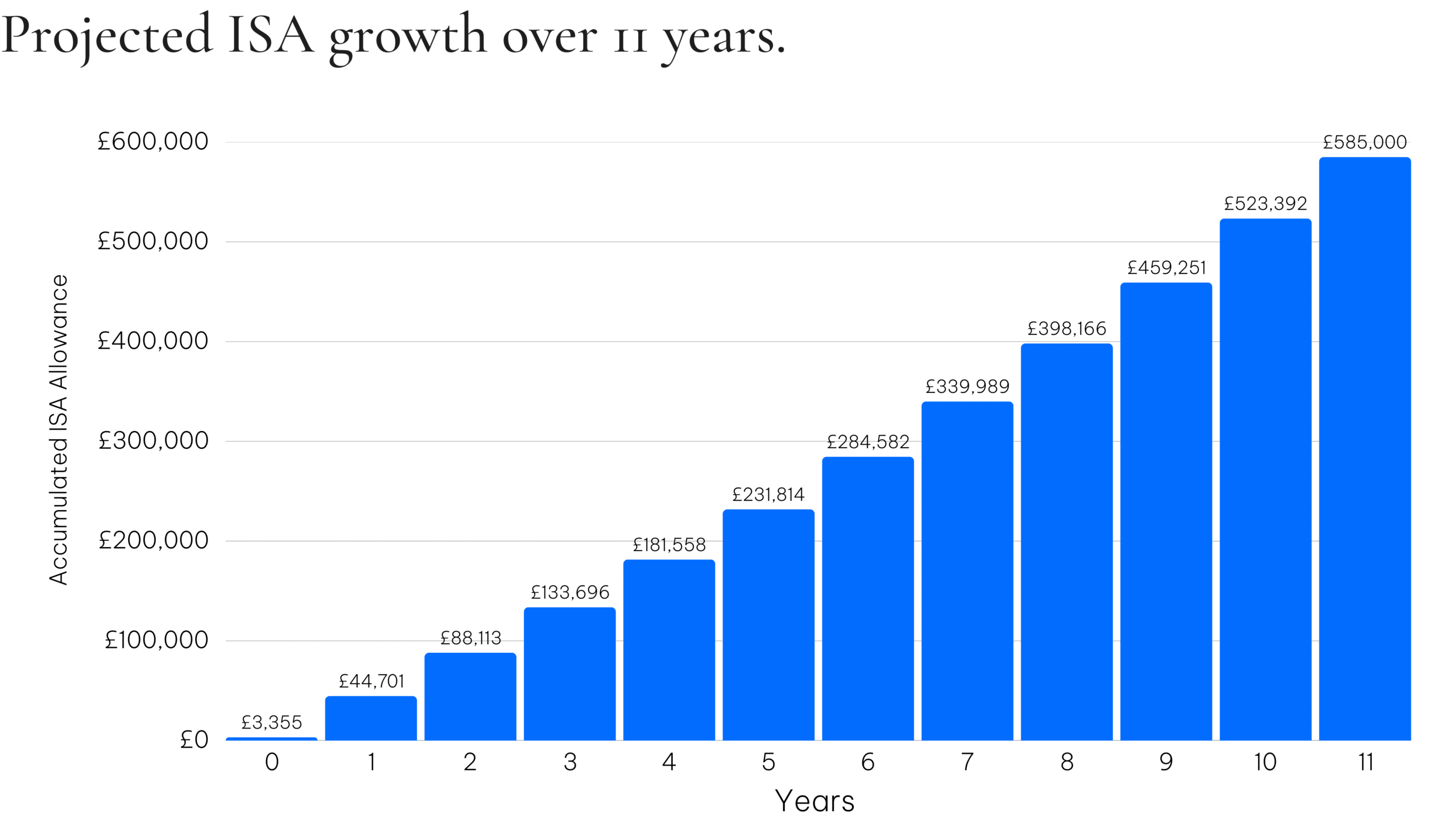
*These figures are examples only and they are not guaranteed – they are not minimum or maximum amounts. What you get back depends on how your investment grows and the tax treatment of the investment.
The value of an ISA with St. James’s Place will be directly linked to the performance of the funds selected and may fall as well as rise. You may get back less than you invested.
The favourable tax treatment of ISAs may be subject to changes in legislation in the future.
Investment Bonds allow you to invest lump sums or regular amounts in a tax-efficient structure. During the life of the bond, returns are not immediately taxed, helping them compound more effectively.
You can withdraw up to 5% of your original investment each year for 20 years without an immediate income or capital gains tax charge. Any unused allowance can roll forward, which provides flexibility to meet future school fees.
Bonds can also be used for intergenerational planning if grandparents wish to help with education funding or to manage inheritance efficiently.
The value of an investment with St. James’s Place will be directly linked to the performance of the funds you select and the value can therefore go down as well as up. You may get back less than you invested.
The levels and bases of taxation, and reliefs from taxation, can change at any time. The value of any tax relief depends on individual circumstances.
Please note that if the withdrawals taken exceed the growth of the bond, the capital will be eroded.
After using ISA allowances, Unit Trusts and General Investment Accounts (GIAs) can be a useful way to invest toward education costs. These vehicles provide access to a wide range of investments, including shares, bonds, and property funds.
They currently benefit from a £500 dividend allowance and a £3,000 capital gains allowance (2024/25). While income and gains may be taxable, they offer flexibility and potential for growth over the long term.
GIAs and Unit Trusts can form part of a balanced financial plan, helping you meet school fee goals alongside mortgage repayments or retirement saving.
The value of an investment with St. James’s Place will be directly linked to the performance of the funds you select and the value can therefore go down as well as up. You may get back less than you invested.
The levels and bases of taxation, and reliefs from taxation, can change at any time. The value of any tax relief depends on individual circumstances.
If grandparents or relatives want to help, the £3,000 annual gifting allowance (£6,000 per couple) offers a tax-efficient way to contribute toward education costs.
Larger gifts can also be exempt from inheritance tax (IHT) if the donor survives seven years or if the payments come from surplus income. Parents can also use their income to pay school fees under the “Dispositions for the maintenance of children” rules, meaning these payments are not treated as taxable transfers.
A disposition is exempt if made:
– in favour of a child of either party to a marriage or civil partnership, and
– for that child’s maintenance or education before age 18 or while in full-time education.
The levels and bases of taxation, and reliefs from taxation, can change at any time. The value of any tax relief depends on individual circumstances.
Further criteria applies within the HMRC IHT Manual IHTM04175 which is subject to change.
Private schools often provide scholarships and bursaries to make education more accessible. Around one-third of pupils in private education receive some form of assistance.³
Bursaries are based on family income and circumstances, while scholarships recognise merit such as academic or sporting achievement. Even partial awards can make a meaningful difference to your budget.
3 ISC School Fee Assistance, April 2023
Some schools offer discounts for paying fees upfront, often with greater savings for multi-year prepayments. If you receive a work bonus or inheritance, this may be worth exploring.
However, weigh the benefits carefully. Investing that money instead could deliver greater returns over time. Flexibility and access to your capital may prove more valuable than a small discount.
Protecting Your Family’s Financial Future
Saving for education is only part of building a strong financial foundation. Protecting your family through appropriate life insurance, income protection, and estate planning ensures long-term security.
Putting a will and guardianship arrangements in place also gives peace of mind that your children and finances will be cared for in any situation.

Should you require more information or have particular questions, we invite you to contact us at your convenience.
Contact Us
Nauman Gondal
Chief Executive Officer